Galicia Road Trip: The Perfect 7 - Day Itinerary

Michele Larovere
Wild Atlantic coastlines, historic cities, island beaches, fishing villages, vineyards and some of Spain’s most distinctive food: this 7-day Galicia road trip is designed to give first-time visitors an unforgettable introduction to one of the country’s most fascinating regions.
Galicia feels different.
Set in the far northwest of Spain, facing the Atlantic Ocean, this green corner of the Iberian Peninsula is a land of rugged headlands, ancient pilgrimage routes, misty forests, granite villages and deeply rooted traditions.
Drive for a couple of hours and the landscape can change completely. One moment you are standing beneath the towers of Santiago de Compostela Cathedral; the next, you are overlooking a wild Atlantic lighthouse or walking between vineyards planted on impossibly steep river canyons.
That diversity is exactly what makes Galicia such a rewarding road-trip destination.
This itinerary takes you through some of the region’s essential experiences: A Coruña, Santiago de Compostela, the Cíes Islands, Rías Baixas, Costa da Morte and Ribeira Sacra.
It is an ambitious itinerary rather than a slow one. If you prefer spending several days in each place, Galicia deserves ten days or even two weeks. But if you have one week and want a memorable first introduction to the region, this route gives you an excellent balance between cities, coast, nature, food and local culture.

Galicia Road Trip at a Glance
Duration: 7 days
Best for: First-time visitors, couples, friends and independent travellers
Transport: Rental car recommended
Ideal season: Late spring to early autumn
Starting point: A Coruña
Ending point: A Coruña
Style: Coast + culture + food + nature + wine
Pace: Moderate to active
The route
Day 1 — A Coruña
Atlantic atmosphere, Tower of Hercules and seafood.
Day 2 — Santiago de Compostela
Cathedral, medieval streets and Galician culture.
Day 3 — Cíes Islands
A full day surrounded by beaches, hiking trails and Atlantic nature.
Day 4 — Rías Baixas
Pontevedra, Combarro, Cambados and Albariño country.
Day 5 — Costa da Morte
Fisterra, Muxía, fishing villages and dramatic Atlantic landscapes.
Day 6 — Ribeira Sacra
Sil Canyon, vineyards, viewpoints and monasteries.
Day 7 — Return towards A Coruña
A flexible final day for additional stops, food and one last taste of Galicia.
Why Galicia Is Perfect for a Road Trip
Galicia is not a destination that reveals itself from one city.
Its real appeal lies in what happens between places.
Small roads climb towards Atlantic viewpoints. Fishing villages appear at the end of narrow estuaries. Vineyards descend towards rivers. Medieval towns sit a few kilometres from beaches, forests and tiny rural communities.
A car gives you the freedom to experience that diversity at your own pace.
The major cities are well connected by public transport, but many of Galicia’s most memorable landscapes are outside the urban centres. Places such as Costa da Morte, the viewpoints of Ribeira Sacra and smaller coastal villages are considerably easier to explore independently by road.
And unlike a road trip built purely around famous landmarks, travelling through Galicia is often about the journey itself.
Stop when you see a small harbour.
Follow a sign towards a miradoiro.
Have lunch in a town you had never heard of.
Order whatever seafood arrived that morning.
Some of the best moments here are difficult to plan in advance.
That is part of Galicia.
Before You Start: Is 7 Days Enough for Galicia?
Seven days are enough to experience Galicia, but not enough to see all of Galicia.
This distinction matters.
The region includes four provinces, hundreds of kilometres of coastline, seven major cities, several wine regions, multiple sections of the Camino de Santiago, islands, mountains and countless small villages.
Trying to see everything in a week would turn the trip into a race.
This itinerary therefore focuses on six very different faces of Galicia.
You will experience:
- an Atlantic city;
- Galicia’s cultural and spiritual capital;
- an island national park;
- the gentler coastline and wine culture of Rías Baixas;
- the wild Atlantic landscapes of Costa da Morte;
- the river canyons and vineyards of Ribeira Sacra.
Think of it as an introduction.
There will still be plenty left for your second trip.
DAY 1 — A Coruña
A Coruña is an excellent introduction to Galicia because the ocean is immediately present.
This compact northern city combines maritime history with beaches, seafood, contemporary city life and one of Galicia’s most recognisable monuments: the Tower of Hercules.
Rather than trying to see everything immediately, use your first day to settle into the rhythm of the region.
Morning: Tower of Hercules
From the lighthouse area, explore part of A Coruña’s long coastal promenade.
The route connects beaches, rocky headlands and urban neighbourhoods and provides a good first sense of how closely Galician cities are connected to the sea.
If the weather is good, stop around Orzán or Riazor Beach before continuing towards the historic centre.
Walk the seafront
From the lighthouse area, explore part of A Coruña’s long coastal promenade.
The route connects beaches, rocky headlands and urban neighbourhoods and provides a good first sense of how closely Galician cities are connected to the sea.
If the weather is good, stop around Orzán or Riazor Beach before continuing towards the historic centre.
Explore the Old Town
Spend the afternoon around Cidade Vella, A Coruña’s historic quarter.
Look for:
- Praza de María Pita
- the glass-fronted galerías
- Igrexa de Santiago
- Praza de Azcárraga
- the streets around the marina
The famous enclosed glass balconies are one of the architectural signatures of the city and have helped give A Coruña its nickname as the City of Glass.
What to eat in A Coruña
our first dinner should introduce you to Galician seafood.
Depending on the season and restaurant, look for:
- pulpo á feira
- mussels
- clams
- scallops
- razor clams
- grilled fish
- Galician beef
- empanada gallega
Do not feel obliged to order Galicia’s most expensive seafood on your first night.
The strength of local cuisine often lies in very simple preparations and excellent ingredients.
Where to stay
Stay in or close to the city centre if you want to explore on foot in the evening.
Best areas:
María Pita / Old Town
Marina
Riazor
DAY 2 — Santiago de Compostela

Few arrivals in Galicia are as memorable as walking into Praza do Obradoiro and seeing Santiago de Compostela Cathedral rising above the square.
Santiago is known worldwide as the final destination of the Camino de Santiago, but treating it only as the end of a pilgrimage would miss much of what makes the city special.
It is one of Europe’s great historic cities and one of the best places to understand Galician identity.
Morning: arrive early
Leave A Coruña in the morning and drive south to Santiago.
After checking in or parking, head directly towards the historic centre.
Santiago’s Old Town is compact and best explored entirely on foot.
Start with:
Praza do Obradoiro
This monumental square forms the symbolic heart of Santiago.
You will see pilgrims arriving with backpacks, groups celebrating the completion of the Camino and visitors simply standing quietly in front of the cathedral.
Give yourself time here.
Do not treat it merely as a photograph stop.
Santiago Cathedral
Visit the cathedral and explore the surrounding squares.
Walk around:
- Praza das Praterías
- Praza da Quintana
- Praza da Inmaculada
The surrounding streets form one of Spain’s most atmospheric historic centres, especially early in the morning or later in the evening when day-trippers begin to leave.
Get lost in the Old Town
One of the best things to do in Santiago requires no itinerary at all.
Walk.
Explore narrow arcaded streets, granite buildings, small squares, traditional shops and food markets.
Look around Rúa do Franco, Rúa do Vilar and the streets surrounding the cathedral, but venture beyond the most obvious tourist route too.
Mercado de Abastos
For a closer look at Galicia’s food culture, visit Santiago’s food market.
Markets matter in Galicia.
Fish, seafood, meat, cheese and vegetables are not simply tourist products here; they remain fundamental parts of everyday food culture.
It is a good place to begin recognising ingredients you will encounter throughout the rest of the road trip.
What to eat in Santiago
Pulpo á feira
Octopus traditionally served with olive oil, salt and paprika.
Pimientos de Padrón
Small green peppers famous for occasionally being surprisingly hot.
Empanada gallega
A Galician savoury pie with fillings that vary from tuna to meat, seafood or vegetables.
Tarta de Santiago
An almond cake associated with the city and marked with the Cross of Saint James.



Evening in Santiago
Stay after sunset.
Santiago changes character when the light fades and the granite streets become quieter.
Return to Obradoiro after dinner.
It is one of those places that deserves to be seen more than once.
Where to stay
For a one-night visit, staying close to the historic centre makes the most sense.
Tomorrow involves travelling towards Vigo for the Cíes Islands, so another option is to leave Santiago later in the afternoon and sleep in Vigo.
For this itinerary, sleeping in Vigo tonight can make Day 3 considerably easier.
If you prefer a relaxed evening in Santiago, stay here and leave early the following morning.
What to eat in Santiago
If there is one day on this itinerary that requires planning in advance, it is this one.
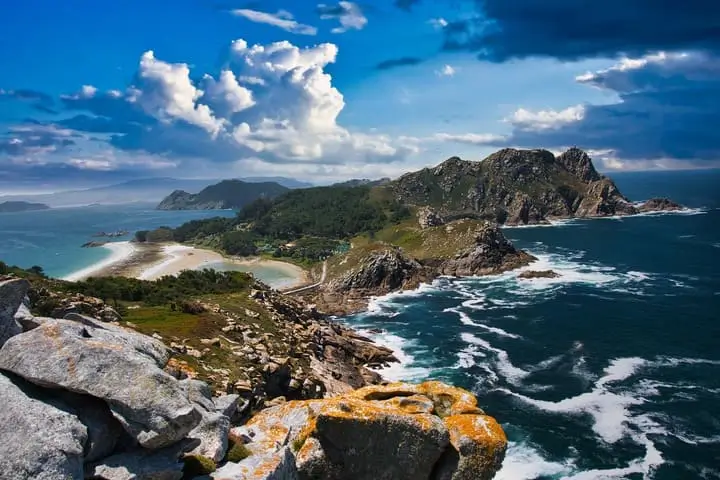
The Cíes Islands rise from the Atlantic at the entrance to the Vigo estuary and form part of the Galician Atlantic Islands Maritime-Terrestrial National Park.
Expect clear water, white beaches, hiking trails, cliffs and wide ocean views.
This is not simply a beach excursion.
The islands are a protected natural environment and visitor numbers are controlled.
Important: book before you travel
During high season — Easter and from 15 May to 15 September — visitors travelling to Cíes or Ons must obtain prior authorisation from the Xunta de Galicia before purchasing the ferry ticket.
Once the temporary pre-booking code is issued, the traveller currently has a limited period in which to buy the ferry ticket through an authorised operator. Outside high season, access arrangements differ and visitors should consult authorised ferry companies directly.
Do not leave this until the morning of your visit in summer.
Popular dates can fill up.
Returning to Vigo
Take an afternoon or early-evening ferry back to Vigo.
If energy allows, spend some time around the old town and harbour before dinner.
Vigo is closely connected to the fishing industry, making it an obvious place for another seafood dinner.
Day 3 — Cíes Islands
After two days exploring Galicia’s cities, Day 3 takes you into a completely different landscape.
The Cíes Islands are part of the Atlantic Islands of Galicia National Park and are one of the most beautiful natural areas in the region. White-sand beaches, clear Atlantic water, pine forests and coastal hiking trails make this one of the highlights of a Galicia road trip.
For this day, plan to leave the car behind and spend almost the entire day on the islands.
Morning — Take the ferry to the Cíes Islands
The easiest way to reach the Cíes Islands is by ferry, usually from Vigo, Cangas or Baiona during the main visitor season. Ferry schedules vary throughout the year, so check availability before planning your route.
If you are travelling during high season — Easter and from 15 May to 15 September — you need an official visitor authorisation from the Xunta de Galicia before buying your ferry ticket. Daily visitor numbers are limited, so booking in advance is strongly recommended.
Visitare la Galicia tip: book the earliest convenient ferry. Arriving early gives you more time to explore the islands before the main beaches become busier.
Start with Praia de Rodas
Your first stop should be Praia de Rodas, the long white-sand beach connecting the islands of Monteagudo and Faro.
The contrast between the pale sand, turquoise water and surrounding hills is one of the most recognisable landscapes in Galicia.


Late morning — Hike towards the viewpoints
The Cíes are not only about beaches.
One of the best ways to understand the islands is to follow one of their marked hiking trails through pine forest, cliffs and Atlantic viewpoints.
If you have enough time and are comfortable walking, dedicate part of the morning to one of the routes leading towards the higher areas of the islands.
The reward is a completely different perspective: Rodas Beach below you, the open Atlantic on one side and the Ría de Vigo on the other.
Bring comfortable shoes. Even if you plan to spend most of the day on the beach, proper footwear makes exploring the islands much easier.
Lunch — Keep it simple
This is one day of the itinerary where lunch does not need to become another destination.
Bring water and something practical to eat, or use the available food services on the islands when operating.
The important thing is to avoid organising your day around a long restaurant stop.
You came here for the landscape.
Afternoon — Beach and Atlantic nature
After your hike, slow the pace down.
Return towards Rodas or continue exploring smaller beaches and coastal paths nearby.
This is the perfect moment to swim, relax or simply walk along the coast.
Unlike Galicia’s cities, there is very little you need to “see” here.
The experience is the place itself: the sea, the sand, the vegetation and the feeling of being surrounded by the Atlantic.
DAY 4 — Rías Baixas
Day 4 is dedicated to one of the most characteristic areas of southern Galicia: the Rías Baixas.
This is a day of small historic towns, fishing villages, vineyards and Atlantic landscapes. The route combines Pontevedra, Combarro and Cambados, with enough time to enjoy the journey without turning the day into a race between stops.
The Rías Baixas are especially associated with the Albariño wine region, coastal culture and some of Galicia’s most recognisable villages.
Afternoon — Beach and Atlantic nature
Begin the day in Pontevedra, one of the best places in Galicia to explore on foot.
The historic centre is compact, lively and easy to walk around, with stone streets, traditional squares and a strong local atmosphere.
Spend the morning wandering through the old town, stopping around areas such as:
- Praza da Ferrería
- Praza da Leña
- Basílica de Santa María a Maior
- the streets around the historic centre
- the riverside area
You do not need a strict itinerary here.
Pontevedra works best when you simply walk, stop for coffee and let the old town set the pace of the morning.
Plan around 1.5 to 2 hours for the visit.
Late morning — Drive to Combarro
From Pontevedra, continue towards Combarro, one of the most distinctive coastal villages in the Rías Baixas.
Combarro is known for its traditional seaside houses, stone crosses and especially its hórreos, the raised Galician granaries that line parts of the waterfront. The village is officially recognised as a historic-artistic ensemble.
Park outside the historic centre and explore the village on foot.
The old streets are small, so this is not a place where you need several hours.
Walk through the historic centre, follow the waterfront and look for the hórreos facing the sea.
Visitare la Galicia tip
Try to visit Combarro outside the busiest lunch hours if possible.
It is a small village and can feel very different depending on the number of visitors. Early morning or later in the afternoon usually gives you more space to appreciate the architecture and waterfront.
Lunch — Seafood with a view
Combarro is also a good place to stop for lunch.
This is the right moment in the itinerary to keep things very Galician: seafood, fish, octopus or other local dishes, ideally somewhere near the water.
There is no need to over-plan the meal.
Choose a place that feels local, order slowly and enjoy the setting.
Then continue north towards Cambados.
Afternoon — Cambados and Albariño country
Cambados is one of the key stops of the day.
The town sits in the heart of the O Salnés area and is closely linked to Albariño wine. The local tourist office itself describes Cambados as the Albariño capital.
Start with a walk through the historic centre.
Some of the most interesting places include:
Praza de Fefiñáns
One of the most recognisable squares in Cambados, surrounded by historic architecture and closely connected with the town’s wine culture.
Ruins of Santa Mariña Dozo
A short drive or walk from the centre takes you to one of the most atmospheric places in town.
The roofless ruins of the former church, surrounded by an old cemetery, create a very different atmosphere from the coastal villages visited earlier in the day.
Cambados historic centre
Leave some time simply to walk.
Cambados is not only a wine stop. It has enough history, traditional architecture and local life to make it worth exploring beyond the wineries.
Late afternoon — Albariño experience
If wine is part of your trip, this is one of the best moments of the entire itinerary to visit a winery.
The wider O Salnés area is covered with vineyards associated with the Rías Baixas Designation of Origin, and wine forms a major part of the local landscape and culture.
Rather than trying to visit several wineries, choose one good experience.
A typical visit may include:
- a walk through the vineyards
- an introduction to Albariño
- information about local wine production
- a guided tasting
Book the winery in advance, especially during summer and weekends.
If you are driving, organise the tasting responsibly or let another member of your group drive.
Optional stop — A Lanzada or O Grove
If you still have time and energy, continue towards A Lanzada or O Grove.
The coastal route through this part of the Rías Baixas passes beaches, islands and vineyards and is one of the most scenic areas of O Salnés.
Do not force this stop if the day is already full.
For a seven-day road trip, enjoying Pontevedra, Combarro and Cambados properly is better than adding another destination simply to tick it off.
Evening — Continue towards Costa da Morte
After Cambados, begin the journey north.
You have two practical options:
Option 1 — Stay in the Rías Baixas
Choose this if you prefer a slower evening and do not mind driving more the following morning.
Option 2 — Drive part of the way towards Costa da Morte
This makes Day 5 easier and gives you more time for the Atlantic coast.
For this itinerary, the second option is slightly more efficient if you are comfortable with some evening driving.
For a seven-day road trip, enjoying Pontevedra, Combarro and Cambados properly is better than adding another destination simply to tick it off.
DAY 5 — Costa da Morte
Day 5 takes you to one of the wildest and most dramatic parts of Galicia: the Costa da Morte.
This stretch of Atlantic coastline is known for its cliffs, lighthouses, fishing villages and powerful ocean views. Compared with the Rías Baixas, the landscape feels more exposed, rugged and remote.
The route for today focuses on Fisterra and Muxía, with optional stops along the coast depending on how much time you have.
Morning — Drive towards Fisterra
Start early and head north-west towards Fisterra, one of the most symbolic places in Galicia.
The town itself is small, but the main reason to come here is the coastline and the legendary Cape Fisterra.
For centuries, this area was associated with the idea of the “end of the world”, and today it remains one of the most atmospheric stops on the Galician coast.
Allow enough time for the drive and avoid planning too many stops before arriving.
Cape Fisterra
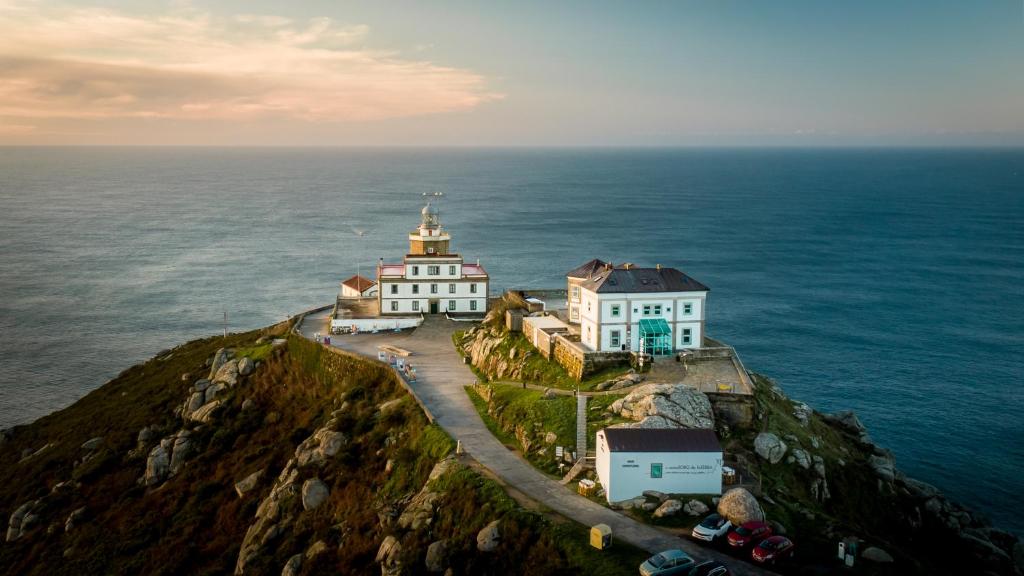
Continue towards the Faro de Fisterra, the lighthouse located at the end of the cape.
From here, the views open directly onto the Atlantic.
On clear days, the horizon feels almost endless. In rough weather, the experience is completely different: waves, wind and low clouds make the landscape feel even more dramatic.
Walk around the lighthouse area and follow the paths overlooking the coast.
This is one of those places where the experience depends less on attractions and more on the landscape itself.
Late morning — Explore Fisterra
After the lighthouse, return towards the town.
Walk around the harbour and the small centre before continuing with the road trip.
Fisterra still has a strong relationship with fishing and the sea, and the harbour is one of the best places to see this side of local life.
If you want to add a beach stop, Praia da Langosteira is a good option nearby.
Lunch — Seafood on the coast
This is one of the best days of the itinerary for a seafood lunch.
Look for local fish, shellfish, octopus or other simple Galician dishes.
Fisterra works well for lunch, especially if you want to eat near the harbour before continuing towards Muxía.
Try not to turn lunch into a long stop, because the second half of the day still has some of the best coastal scenery ahead.
Afternoon — Drive towards Muxía
From Fisterra, continue north towards Muxía.
The drive itself is part of the experience.
This section of the Costa da Morte passes through a quieter Galicia, with forests, small villages and glimpses of the Atlantic appearing between the roads.
Muxía is one of the most important coastal stops in the area and has a very different atmosphere from Fisterra.
o a long stop, because the second half of the day still has some of the best coastal scenery ahead.
Visitare la Galicia tip
Do not try to cover the entire Costa da Morte in one day.
The coastline is much larger than it looks on a map, and many roads are slower than expected.
For this seven-day itinerary, focus on Fisterra + Muxía, then add one optional stop if time allows.
This gives you enough variety without spending the whole day inside the car.
Day 6 — Ribeira Sacra
After the wild Atlantic landscapes of Costa da Morte, Day 6 takes you inland to one of Galicia’s most distinctive regions: the Ribeira Sacra.
Here, the scenery changes completely.
Deep river canyons, steep vineyards, ancient monasteries and small villages replace the beaches and fishing ports of the previous days.
The highlight of the region is the Sil Canyon, where vineyards descend dramatically towards the river and some of Galicia’s best viewpoints look out across the valley.
This is also one of Galicia’s most important wine regions, especially for red wines made from the Mencía grape.

Morning — Drive towards the Sil Canyon
Start early from Costa da Morte and head inland towards Ribeira Sacra.
This will be one of the longer driving sections of the itinerary, so avoid filling the morning with unnecessary stops.
Once you reach the region, the roads become part of the experience.
You will pass through forests, vineyards, small villages and narrow roads overlooking the valleys below.
Take your time, particularly on the smaller roads around the canyon.
First stop — Sil Canyon viewpoints
Begin your visit with one or two viewpoints overlooking the Cañón del Sil.
There are several viewpoints around the canyon, and trying to visit all of them is unnecessary.
Choose a couple and give yourself enough time to enjoy them properly.
One of the most famous is Miradoiro de Cabezoás, which offers a wide view across one of the most dramatic bends of the Sil River.
Another excellent option is Balcones de Madrid, near Parada de Sil.
From these viewpoints, you can really understand why Ribeira Sacra is so different from the rest of this road trip.
Visitare la Galicia tip
Do not judge distances in Ribeira Sacra only by kilometres.
A destination that looks close on the map can take longer to reach because of winding roads, elevation changes and frequent viewpoints along the way.
For this reason, keep your itinerary flexible and avoid planning too many stops.
Late morning — Discover a monastery
Ribeira Sacra literally means “Sacred Shore”, a name connected to the large number of monasteries, churches and religious communities that developed around these valleys.
One of the best ways to understand the region is to include at least one monastery in your day.
A particularly impressive option is the Monastery of Santo Estevo de Ribas de Sil, a historic monastery surrounded by forest above the Sil Valley.
Today, the complex is home to a Parador, but its cloisters and architecture still reflect centuries of local history.
Another option is Santa Cristina de Ribas de Sil, set in a peaceful forest near Parada de Sil.
You do not need to visit several monasteries.
Choose one and combine it with the landscapes and wine culture of the region.
Lunch — Slow down
Ribeira Sacra is a good place for a slower lunch.
Look for traditional Galician cuisine in one of the small towns or villages around the canyon.
Depending on where you are travelling, Monforte de Lemos, Parada de Sil or the surrounding countryside can all work well.
This is a day where the journey itself matters as much as individual attractions, so leave enough time between lunch and your afternoon plans.
Afternoon — Experience the vineyards
Wine is an essential part of the Ribeira Sacra landscape.
The vineyards here often grow on extremely steep slopes above the Sil and Miño rivers.
Because many vines have traditionally been cultivated and harvested by hand on difficult terrain, local wine production is often described as heroic viticulture.
If wine interests you, book a visit to a local winery.
A good experience can include:
- a guided vineyard visit
- an introduction to heroic viticulture
- an explanation of Ribeira Sacra wine production
- a tasting of local wines
- views over the valley and vineyards
Rather than trying to visit several wineries, choose one quality experience and take your time.
Optional experience — Sil River boat trip
Boat trips operate on sections of the Sil River and offer a completely different perspective from the viewpoints above.
From the river, you can see the scale of the canyon walls and the vineyards climbing the slopes around you.
If you want to include a boat trip, reserve it in advance and build the rest of your day around the departure time.
Trying to combine too many viewpoints, a monastery, a winery and a boat trip can make the day unnecessarily rushed.
For most travellers, I would choose either:
Viewpoints + monastery + winery
or
Viewpoints + boat trip + winery
Both provide an excellent introduction to Ribeira Sacra.
Late afternoon — Monforte de Lemos
If your route and timing allow, finish the afternoon in Monforte de Lemos, one of the main towns of Ribeira Sacra.
It makes a useful base for exploring the region and offers a very different atmosphere from Galicia’s coastal destinations.
Walk around the centre, enjoy a coffee or simply use the town as a relaxed final stop before dinner.
Evening — Stay in Ribeira Sacra
For this itinerary, I recommend spending the night in Ribeira Sacra rather than immediately driving back towards A Coruña.
Look for accommodation around:
Monforte de Lemos, if you prefer convenience and restaurants.
Parada de Sil, if you want to stay closer to the canyon.
Or choose a rural hotel, winery accommodation or countryside property for a more immersive experience.
A quiet evening surrounded by vineyards and countryside fits particularly well here.
The following morning you can start the final drive towards A Coruña.
Day 7 — Return towards A Coruña
The final day of your Galicia road trip is deliberately more flexible.
After six days travelling between cities, islands, vineyards and Atlantic coastline, today is about slowly making your way back towards A Coruña while leaving space for one or two final stops along the route.
Rather than filling the day with another long list of attractions, use it to revisit what you enjoyed most about Galicia: good food, small towns, viewpoints and the freedom of the road.
Morning — Leave Ribeira Sacra
Start the morning in Ribeira Sacra and begin the drive north towards A Coruña.
Depending on where you stayed the previous night, the journey will usually take several hours, so there is no need to rush.
This final transfer also gives you a chance to see another side of Galicia: inland roads, forests, farmland and smaller towns that are often overlooked by first-time visitors.
Option 1 — Stop in Lugo
If you want to add one final historic city to the itinerary, Lugo is one of the best options.
The city is famous for its Roman walls, which completely surround the historic centre and are recognised as a UNESCO World Heritage Site.
Walk along the walls, explore the old town and stop for a coffee or a light lunch before continuing towards A Coruña.
Lugo works particularly well if you want a final cultural stop without adding too much complexity to the route.
Allow around 1.5 to 2 hours.
Option 2 — Betanzos
If you prefer a smaller and more local-feeling stop, continue towards Betanzos, located much closer to A Coruña.
Its historic centre is compact, atmospheric and easy to explore on foot.
Betanzos is also famous in Galicia for its distinctive tortilla de patatas, usually served soft and slightly runny inside.
If food has been one of the highlights of your road trip, this is a very good place for one final Galician lunch.
Option 3 — Keep the day completely open
You do not actually need another major destination.
If the previous six days have been busy, use the final day to travel slowly, stop wherever something catches your attention and arrive in A Coruña without a strict schedule.
A quiet village, roadside restaurant or unexpected viewpoint can be a better ending to the road trip than another famous attraction.
Afternoon — Return to A Coruña
Arrive back in A Coruña during the afternoon.
If you still have time, spend your final hours somewhere you missed on Day 1 or simply return to your favourite part of the city.
You could:
- walk along the promenade
- return to the old town
- have a drink around María Pita
- visit a beach
- enjoy one final seafood meal
- watch the Atlantic before leaving Galicia
The aim is not to start another full sightseeing day.
It is to finish the trip at a slower pace.
One last Galician meal
Before your road trip ends, leave time for one final meal.
Galicia is a destination where food is part of the travel experience, so ending the journey around a table feels particularly appropriate.
Depending on what you have already tried during the week, look for dishes such as:
- pulpo
- fresh fish
- shellfish
- empanada
- Galician beef
- local cheeses
- traditional desserts
Pair it with a local wine or simply enjoy the atmosphere of your final evening.
Returning the rental car
If you are flying out from A Coruña Airport, allow enough time to refuel the car and complete the rental return process.
Check the fuel policy and return conditions in advance, especially if your flight leaves early the following morning.
If your flight departs from Santiago instead, you can adjust the final day and continue south after your last stop rather than returning all the way to A Coruña.
Visitare la Galicia tip
Keep Day 7 flexible.
After a full week on the road, you may want another historic stop — or you may simply want to slow down.
Both options are valid.
The best road trips are not always the ones where you see the most places. They are the ones where you leave enough time to actually experience them.
And that is especially true in Galicia.